


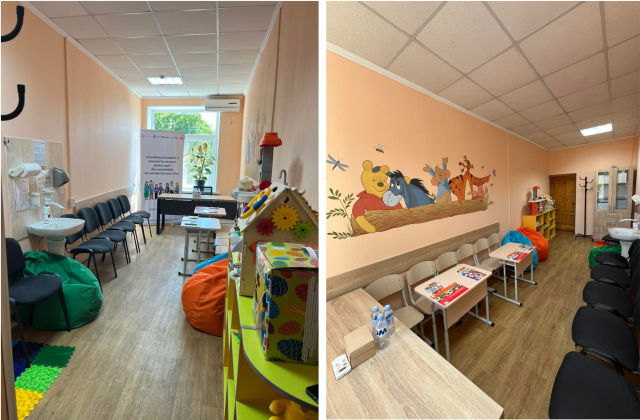
A new friendly space for parents and caregivers has been opened at the Soroca Health Center (16 Mihai Eminescu Street, Room 24), providing an opportunity for direct discussions with specialists about children’s health, disease prevention, and vaccination. The space offers the community an accessible and child-friendly environment for information and dialogue with healthcare professionals, helping to build trust and bring families closer to health services.
The initiative is implemented as part of the UNICEF project “Strengthening Trust and Access to Vaccination for Children in Roma Communities in Soroca and Otaci”, launched by the Ministry of Health and the National Public Health Agency, with financial support from the Government of Norway, in partnership with the Union of Roma Youth of the Republic of Moldova “TĂRNĂ ROM”.
The new space will host weekly “Health Hours” — thematic meetings for parents and caregivers focused on practical topics related to children’s and family health. Discussions will cover, among other topics, vaccine safety and effectiveness, adverse reactions and how to manage them, myths and misinformation about vaccination, the importance of following the immunization schedule, as well as healthy nutrition, child development, disease prevention, and healthy behaviours within the family. Parents will have the opportunity to ask specialists questions directly and receive clear, accessible, evidence-based information.
Representatives of UNICEF, “TĂRNĂ ROM”, the healthcare system, and the community attended the launch event. They discussed the results already achieved through the project, as well as the role of the new space and the activities to be carried out there in building trust and facilitating families’ access to health information and services.
“This initiative directly responds to the voice of the community. As part of a qualitative study conducted with Roma families in Soroca and Otaci, parents and community members clearly expressed the need for regular meetings in a safe and friendly space where they could openly discuss vaccination and other health-related topics with specialists. These meetings provide not only information, but also an opportunity to clarify concerns, myths and misunderstandings, build trust, and support families in making informed decisions about their children’s health,” emphasized Cristina Stratulat, Social and Behavioural Change Programme Coordinator at UNICEF.
As part of the project, community meetings are also being held, along with training sessions for healthcare workers, social assistants, community mediators, Roma mothers-leaders, and other local stakeholders in Soroca and Otaci. These activities focus on promoting vaccination, addressing misinformation, and strengthening inclusive, non-discriminatory communication with families. The initiative also includes the development of media materials providing evidence-based information on immunization.
It is worth noting that vaccination coverage in the Republic of Moldova remains below the recommended 95% threshold, increasing the risk of outbreaks of vaccine-preventable diseases. In 2025, approximately 6,000 children nationwide had not received a single dose of any vaccine, while in Soroca district alone, approximately 250 childrenwere in the same situation.